Volcanoes: types, formation, and why they cluster in certain regions
Volcanoes are the surface expression of Earth’s internal heat. They occur mainly at plate boundaries but can also form in plate interiors over mantle hotspots.
What is a volcano?
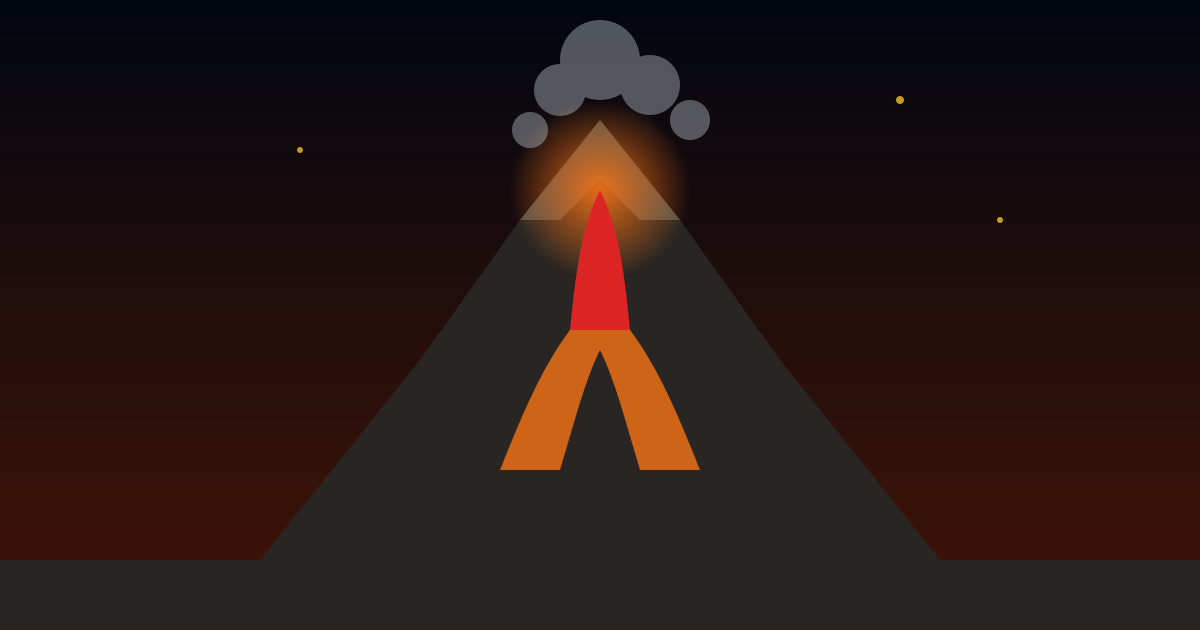
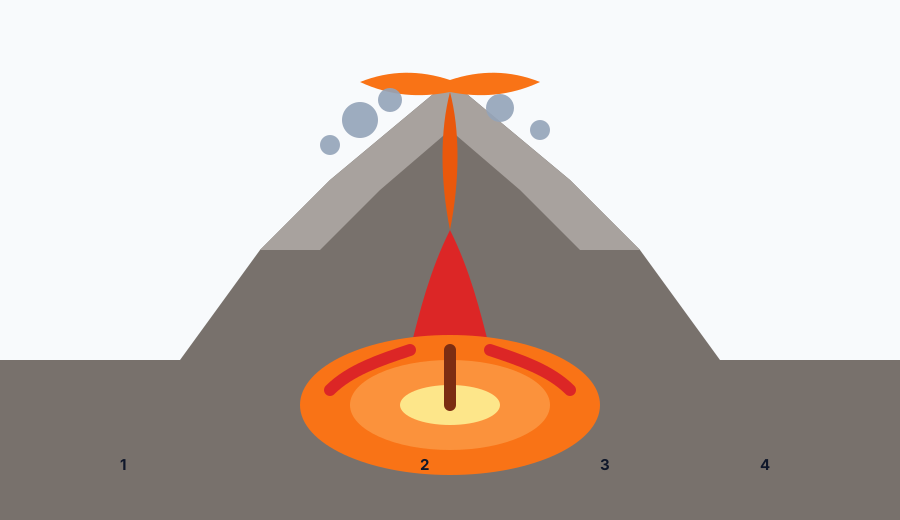
A volcano is a geological structure connecting Earth’s interior to the surface. Magma, partially molten rock, rises through conduits and magma chambers and may reach the surface as lava, ash, and gases.
Not all magma reaches the surface. Some solidifies at depth and forms intrusive rocks. When an eruption occurs, the style depends on magma composition, gas content, and interaction with water.
Magma, lava, and eruption styles
Magma is molten rock underground; lava is magma that reaches the surface. Composition influences viscosity. Magmas with more silica are more viscous and retain gases, favoring explosive eruptions. Basaltic magmas are more fluid and tend to produce effusive eruptions.
Effusive eruptions generate lava flows and can be relatively safe to observe from a distance. Explosive eruptions launch ash, rock fragments, and gases into the atmosphere and can generate pyroclastic flows, which are far more dangerous.
Where volcanoes form
Most active volcanoes are at plate boundaries. In subduction zones, water released by the sinking plate helps melt the mantle and generates volcanic arcs such as the Andes, Japan, and the Philippines.
At divergent boundaries, magma rises to fill the gap between plates, forming ridges and basaltic volcanoes. At hotspots, magma comes from deep mantle anomalies and can cut through a plate interior, as in Hawaii.
- Subduction: explosive volcanoes and volcanic arcs.
- Divergence: basaltic volcanoes and ocean ridges.
- Hotspots: island chains and intraplate volcanoes.
Volcano types
| Type | Shape | Typical eruption | Example |
|---|---|---|---|
| Shield | Broad and low | Effusive, fluid lava | Mauna Loa, Hawaii |
| Stratovolcano | Tall and conical | Explosive, alternating lava and ash | Mount Fuji, Vesuvius |
| Cinder cone | Small and steep | Short and explosive | Paricutín, Mexico |
| Caldera | Large depression | Very explosive | Yellowstone, Toba |
Volcanic hazards
Hazards are not limited to lava. Pyroclastic flows are hot clouds of ash and gas that race down slopes and can be devastating. Lahars are mudflows formed when ash and debris mix with water.
Ash can collapse roofs, affect air quality, contaminate water, and disrupt aviation. Volcanic gases can be toxic at high concentrations, and eruptions can alter local and, in extreme cases, global climate.
How volcanoes are monitored
Seismographs detect tremors associated with magma movement. GPS and satellites measure ground deformation; gas sensors and thermal images help identify changes. Volcanic observatories combine these data to issue alerts.
Eruption prediction is still limited, but monitoring enables preventive evacuations and reduces damage. International cooperation and community education are essential.
Are there volcanoes in Brazil?
There are no active volcanoes in Brazil. The country is in the interior of the South American Plate, far from the Andean subduction zones. There are, however, traces of ancient volcanism, such as the basaltic rocks of the Paraná Basin and alkaline structures in southeastern Brazil.
Fernando de Noronha, in the Atlantic, is formed by ancient volcanic rocks. These places are geologically and touristically interesting but pose no current eruption risk.
Frequently asked questions
What is the difference between magma and lava?
Magma is molten rock underground; lava is magma that reaches the surface. Composition and gas content influence the eruption style.
Can volcanoes cause tsunamis?
Yes. Explosive eruptions, flank collapses, and landslides can displace large volumes of water and generate tsunamis, although earthquakes are the most common cause.
Are there active volcanoes in Brazil?
No. Brazil is in the interior of the South American Plate and has no active volcanoes. There are traces of ancient volcanism, such as basaltic rocks and alkaline structures.