Magnitude and intensity: how earthquakes are measured
When an earthquake makes the news, the word “magnitude” usually appears. But what does that number measure? And why can two people feel the same earthquake differently? The answer lies in the difference between magnitude and intensity.
What is magnitude?
Magnitude measures the energy released at the earthquake source. It is calculated from seismograph records and, for large events, usually uses the moment magnitude scale (Mw).
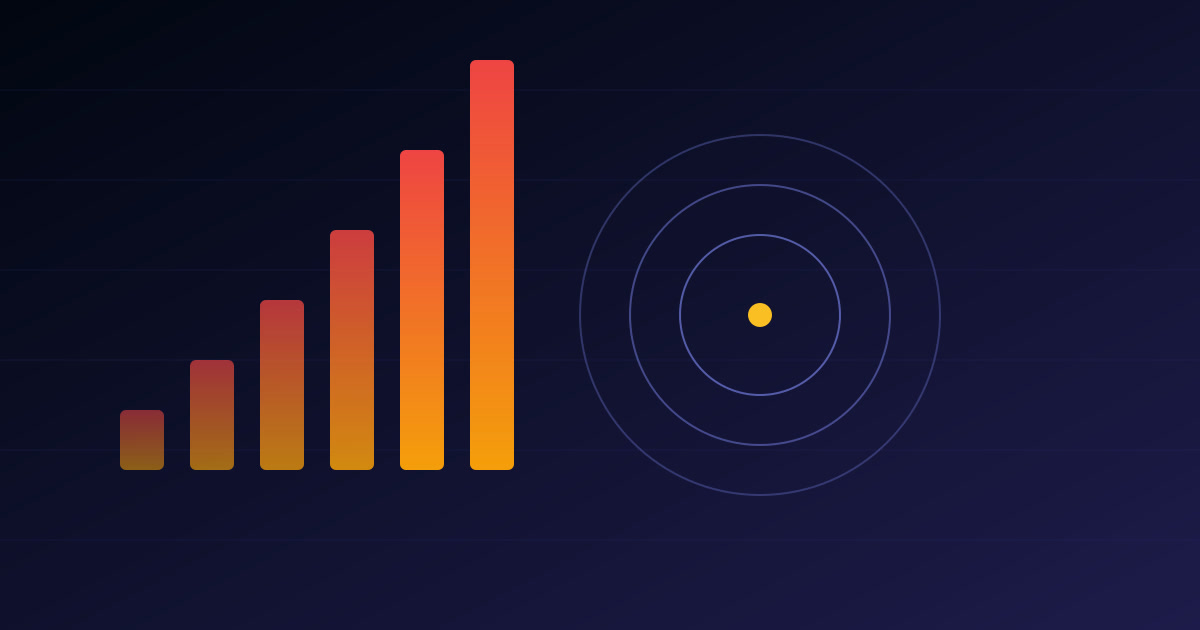
The scale is logarithmic. An increase of one unit represents about 32 times more energy release. A magnitude 7 earthquake is therefore far more energetic than a magnitude 6, not just “a little bigger”.
| Magnitude | Relative energy | Comparison |
|---|---|---|
| 5.0 | 1 | Reference |
| 6.0 | ≈ 32× | About 32 times more energy |
| 7.0 | ≈ 1,000× | About one thousand times more energy |
| 8.0 | ≈ 32,000× | About 32 thousand times more energy |
| 9.0 | ≈ 1,000,000× | About one million times more energy |
Richter, moment, and other scales
The Richter scale was developed in the 1930s for local earthquakes in California. It works well for small, nearby events but saturates for very large earthquakes. For that reason, scientists use moment magnitude, which considers rupture area, displacement, and rock rigidity.
When USGS reports “M 7.2”, it usually means moment magnitude. Other scales, such as mb or ML, may appear in specific catalogs, but they should not be compared directly without context.
What is intensity?
Intensity describes the effects of an earthquake at a specific location: how strongly people felt it, how objects moved, and what damage occurred. The Modified Mercalli Intensity scale is widely used, ranging from I (not felt) to XII (total destruction).
A single earthquake has one magnitude but can have many intensities. The same event may be felt weakly in one city and cause damage in another, depending on distance, soil, and construction.
Why magnitude is not “shaking strength”
Magnitude relates to the source. Intensity relates to the effect. Saying an earthquake was “magnitude 6” does not tell you how many people felt it, how long the shaking lasted, or what damage occurred.
Depth and fault type also influence how energy reaches the surface. A deep, high-magnitude event may cause less damage than a shallow, lower-magnitude one.
How to read USGS data
USGS feeds include magnitude, magnitude type, location, time, depth, and a link to the detailed event page. Magnitude can be revised after the first estimate as more stations process the data.
Depth is the distance from the hypocenter to the surface. Events up to ~70 km deep are considered shallow; 70–300 km intermediate; above 300 km deep.
- Magnitude: energy at the source, on a logarithmic scale.
- Intensity: observed effects at a location.
- Depth: distance from the hypocenter to the surface.
- Revisions: initial magnitude can change after analysis.
- Do not compare different magnitude scales without checking the type.
Common mistakes
Saying a magnitude 7 earthquake is “twice” a magnitude 6 is incorrect. The energy difference is about 32 times. It is also wrong to use magnitude alone to estimate damage without considering depth, distance, and building vulnerability.
Another mistake is treating the scale as a measure of “how many times the ground shook”. Perceived motion depends on local factors and can vary greatly within the same city.
Frequently asked questions
Is magnitude 7 twice as strong as magnitude 6?
No. The scale is logarithmic. One unit represents about 32 times more energy release. The difference in recorded amplitude is also large, but it is not simply “double”.
What is the difference between Richter and moment magnitude?
Richter was designed for local events and saturates for very large earthquakes. Moment magnitude (Mw) considers rupture area, displacement, and rock rigidity and is more suitable for large events.
Why does intensity vary so much within one city?
Soil type, topography, water-table depth, and building quality influence wave amplification. Soft sedimentary ground can amplify motion; rigid rock responds differently.