South American Plate
The plate that carries Brazil and raised the Andes.
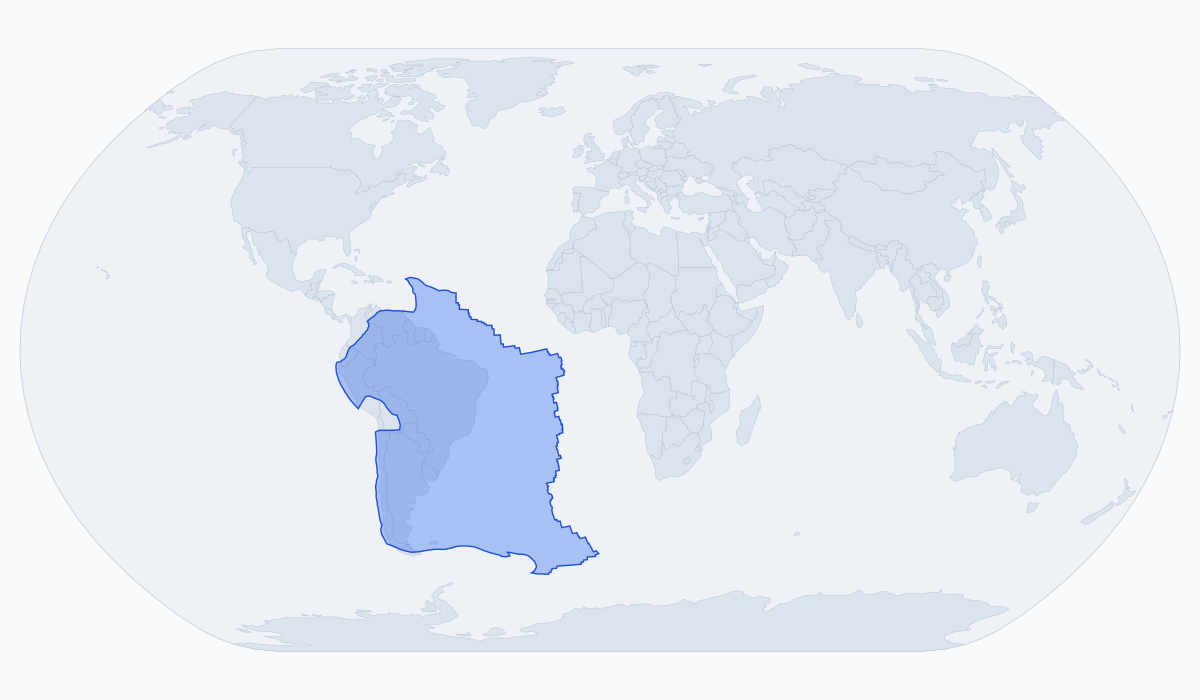
The South American Plate stretches from the Atlantic to the Peru-Chile Trench. On one edge it dives beneath the continent and builds the Americas’ greatest mountain chain; everywhere else it is a stable block that only shakes on ancient faults.
Updated on November 17, 2026
Where it is in the world
Approximate area
43.6 mi km²
Countries on the plate
13
Neighbouring plates
9
One plate, two behaviours
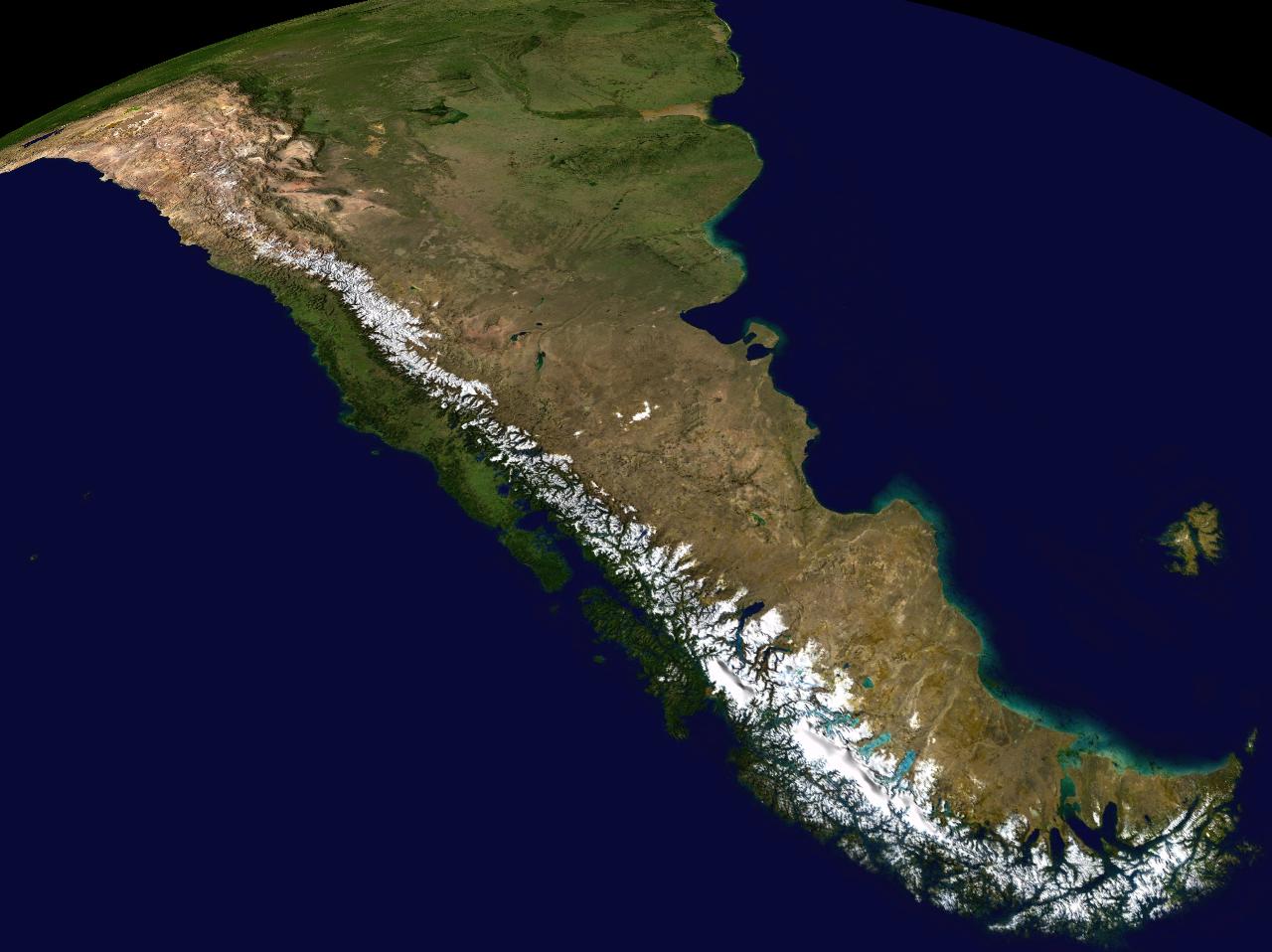
To the west, the Nazca Plate dives beneath the South American at about 6 to 7 cm per year. That convergence raised the Andes, opened the trench and fed the volcanic arc that runs the length of the continent.
To the east, the boundary is the Mid-Atlantic Ridge, where new crust forms. Between the two edges, the plate interior is old and rigid — which is why Brazil, in the middle, shakes little and Chile, on the edge, shakes a lot.
Who sits on it
The plate covers most of South America, including Brazil, Argentina, Chile, Peru, Bolivia, Paraguay, Uruguay, Colombia, Venezuela, Ecuador and the Guianas. It is one of the largest continental plates on the planet.
Countries on this plate
- Argentina
- Brazil
- Falkland Is.
- Guyana
- Paraguay
- Suriname
- Uruguay
- Chile
- Venezuela
- Peru
- Bolivia
- Ecuador
Computed by sampling each country’s area over the PB2002 polygons. Countries with less than 5% of their area on the plate are not listed.
Frequently asked questions
Which plate is Brazil on?
On the South American Plate, entirely within it.
Why does Chile have more earthquakes than Brazil?
Because it is on the active edge, where the Nazca Plate dives. Brazil is in the stable interior.
Is the plate still moving?
Yes, about 3 cm per year relative to Africa, measured by GPS.