Pacific Plate
The largest plate on the planet, ringed by fire.
The Pacific Plate is the largest tectonic plate on Earth and the fastest among the major ones. Along almost its entire edge it dives beneath other plates — and that is what sustains the Ring of Fire.
Updated on November 17, 2026
Where it is in the world
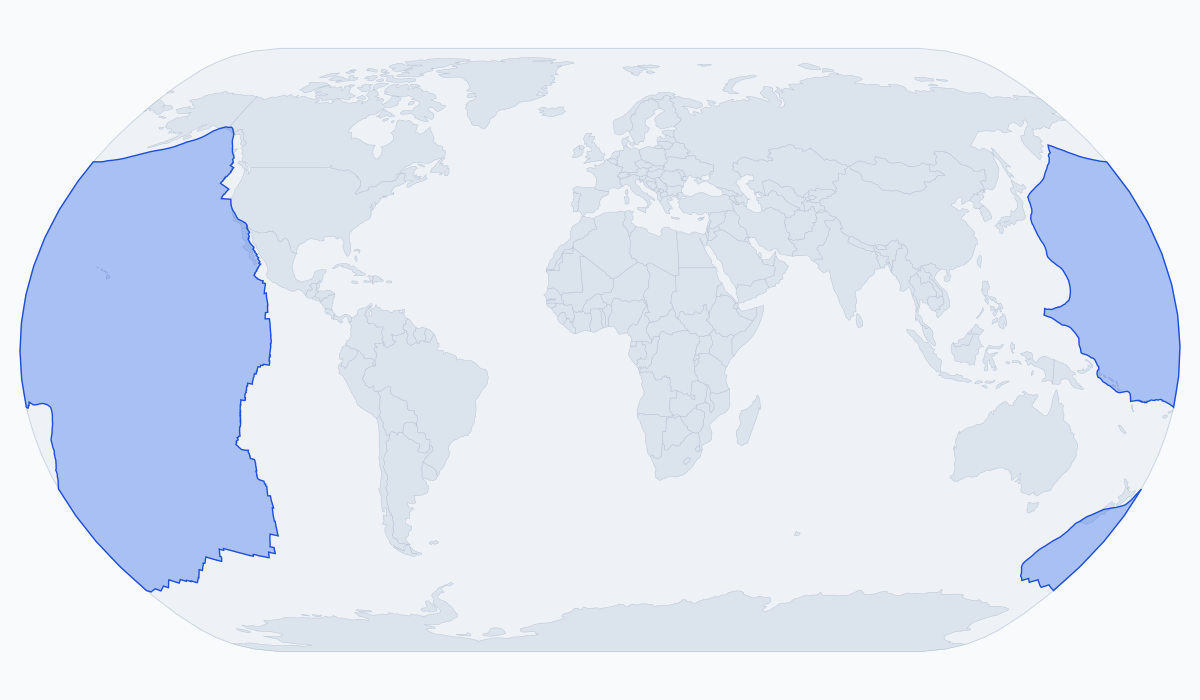
Approximate area
103.3 mi km²
Countries on the plate
3
Neighbouring plates
23
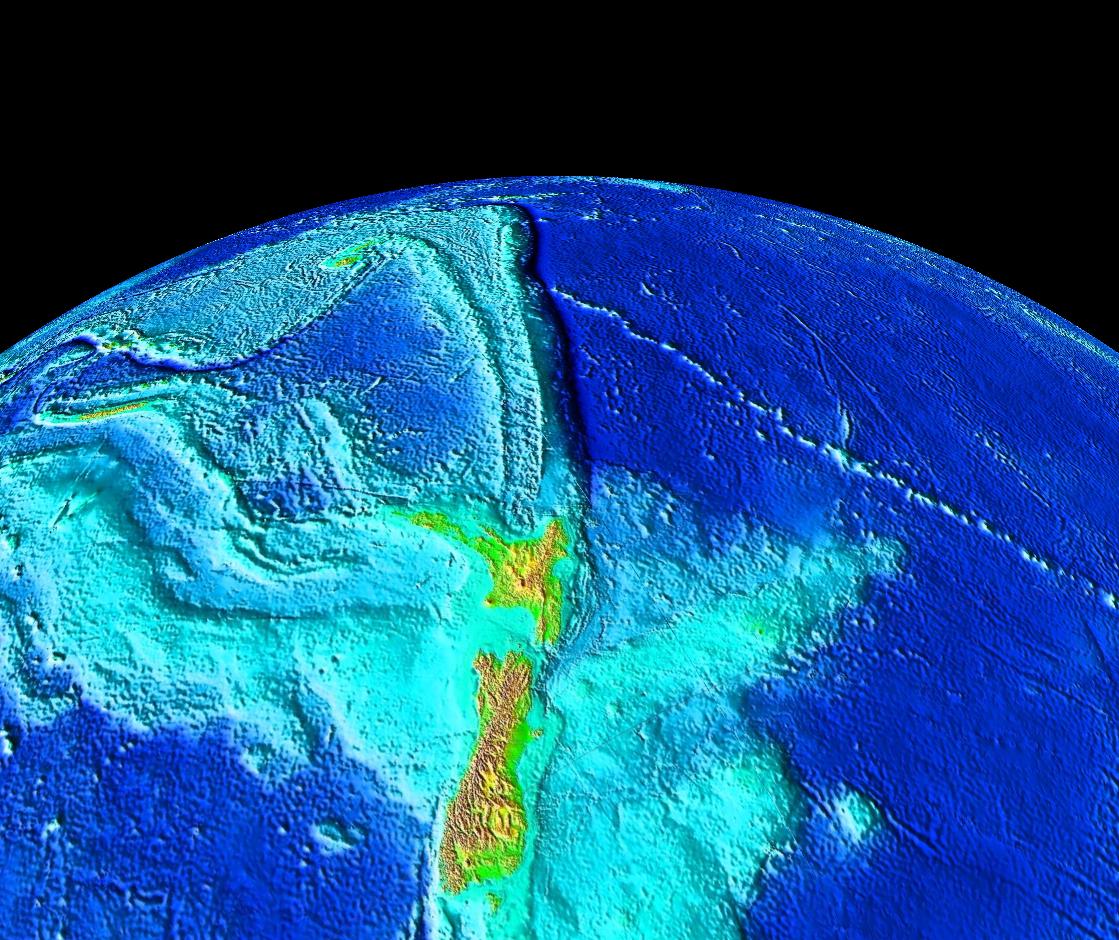
The plate behind the Ring of Fire
About 75% of active volcanoes and 90% of earthquakes lie in the band around this plate. The reason is simple: almost the entire Pacific edge is a subduction zone.
The plate moves northwest at about 5 cm per year relative to North America. At the edges, that means subduction in Japan and the Aleutians and strike-slip in California.
A plate almost without land
The plate is almost entirely oceanic. The few territories on it are islands — which is why, on the map, it appears as a large blue area surrounded by continents.
Countries on this plate
- Solomon Is.
- New Zealand
- Mexico
Computed by sampling each country’s area over the PB2002 polygons. Countries with less than 5% of their area on the plate are not listed.
Frequently asked questions
Which is the largest tectonic plate?
The Pacific Plate.
Why does the Pacific have more tsunamis?
Because it is bordered by subduction zones capable of displacing water vertically.