Nazca Plate
The small plate that raised the Andes.
The Nazca Plate is one of the smallest oceanic plates — and one of the most consequential. Diving beneath South America, it built the Andes, opened the Peru-Chile Trench and generates some of the largest earthquakes on the planet.
Updated on November 17, 2026
Where it is in the world
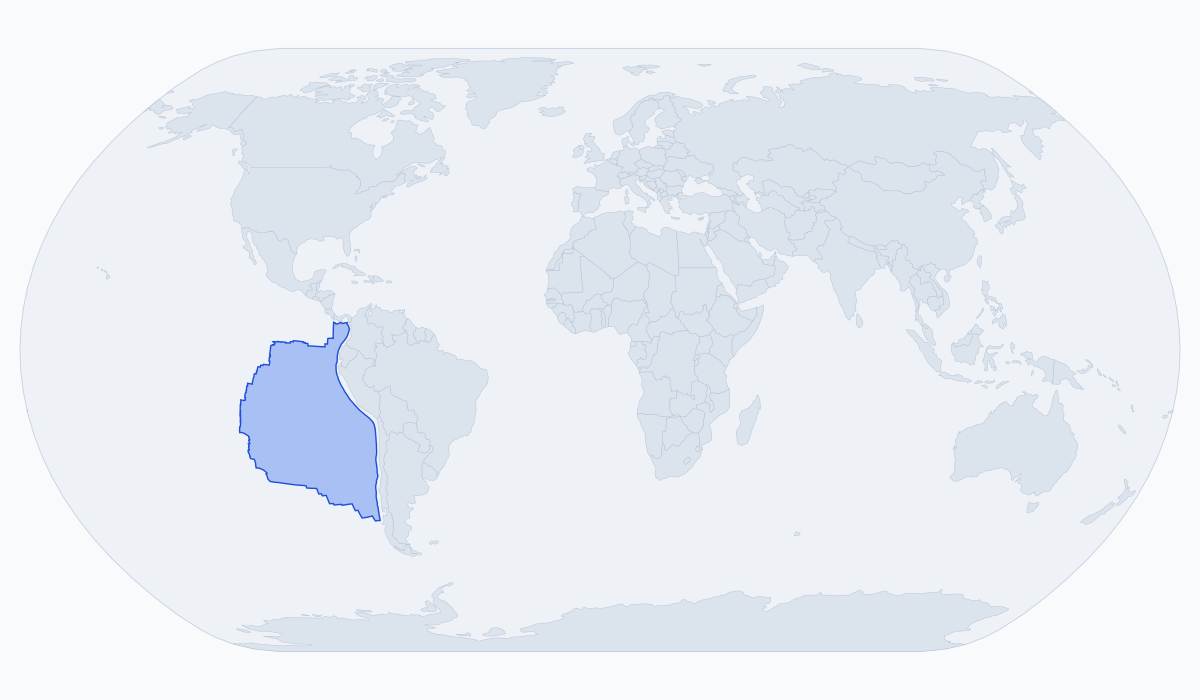
Approximate area
15.6 mi km²
Countries on the plate
0
Neighbouring plates
10
The subduction that builds mountains
The plate descends 6–7 cm per year beneath the continent. Water trapped in minerals is released into the mantle, lowering the melting point and generating magma — the engine of the Andean volcanic arc.
It is also one of the fastest subduction zones in the world, which explains the frequency of large ruptures and tsunamis on the coasts of Chile and Peru.
The plate in numbers
The plate has no continental territory: it is entirely oceanic. The Galápagos Islands sit on it, which is why the archipelago has active volcanism.
Countries on this plate
Oceanic plate, with no continental territory.
Computed by sampling each country’s area over the PB2002 polygons. Countries with less than 5% of their area on the plate are not listed.
Frequently asked questions
Which plate is under Chile?
The South American on the continent, and the Nazca diving beneath it.
Does Nazca have volcanoes?
The plate itself does not; magmatism appears on the continent above it.